

Courses
23-05-2023

Vote
-
For further training via the Zoom program or at our office? ?
Register a
Violation
We you
Contact youS.O.S.
0032 02 7322568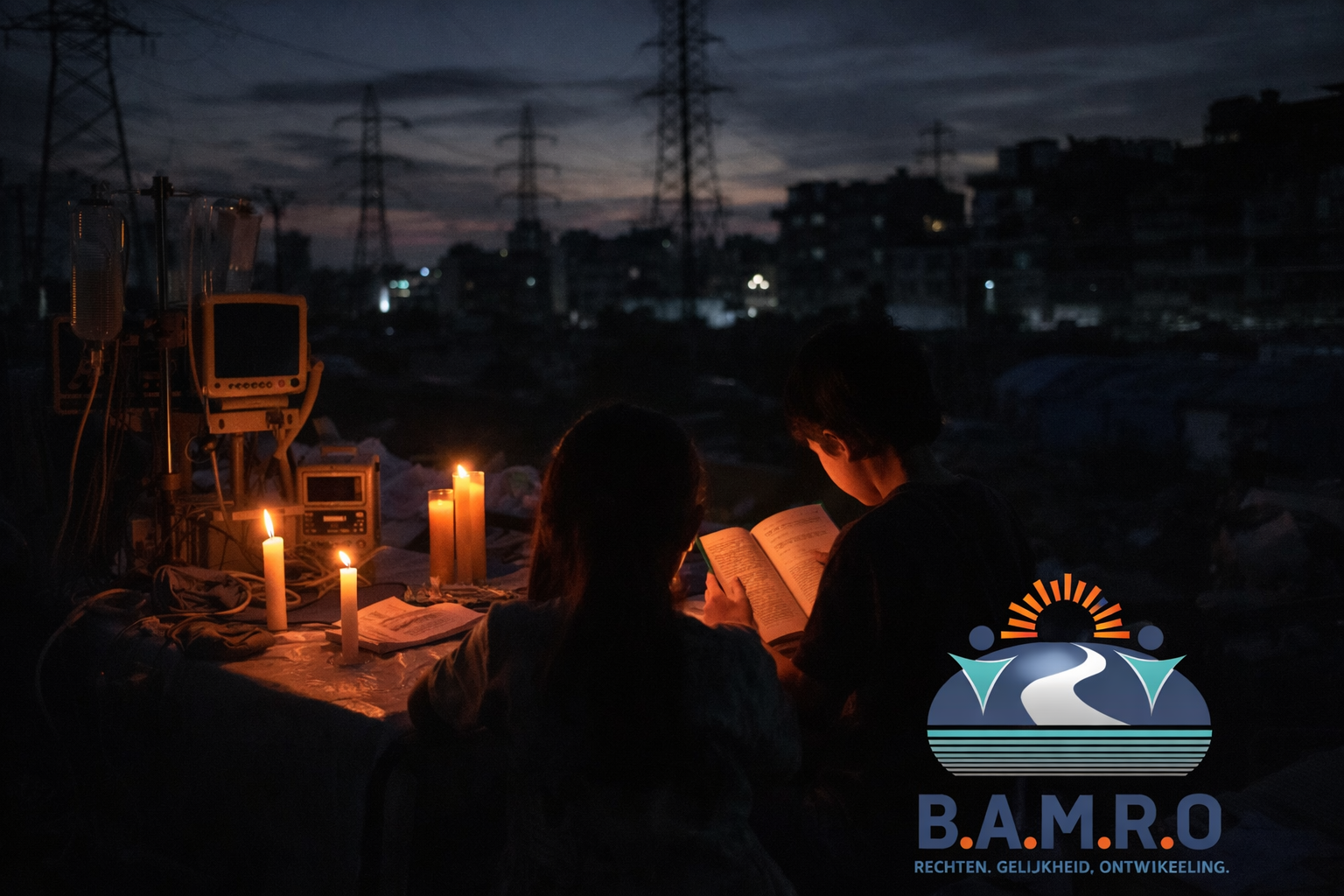
Energy Crisis and Its Impact on Fundamental Rights: When Electricity Becomes a Human Rights Issue Introduction
Energy Crisis and Its Impact on Fundamental Rights: When Electricity Becomes a Human Rights Issue
Introduction
Amid escalating regional tensions, particularly in the Middle East, the energy crisis has emerged as one of the most critical challenges affecting fundamental human rights. Electricity is no longer merely a technical service; it has become an essential element in ensuring the right to a dignified life, education, health, and human security.
Recent experiences in countries such as Iraq and Lebanon demonstrate that energy-related crises extend beyond infrastructure issues and pose a direct threat to human rights.
1. The Right to Education Under Threat
Frequent power outages have significantly disrupted the educational process:
- Suspension of online learning
- Reduced ability of students to study at home
- Disruptions to exams and academic activities
The right to education, as enshrined in international conventions, is indirectly violated due to the lack of basic services.
2. Collapse of the Right to Health
The healthcare sector is among the most affected, as hospitals rely heavily on electricity to operate:
- Life-support and intensive care equipment
- Surgical devices
- Systems for storing medicines and vaccines
Power outages not only disrupt healthcare services but may also lead to loss of life, constituting a violation of the right to life.
3. Human Dignity and Standard of Living
The energy crisis directly impacts daily life:
- Inability to secure heating or cooling
- Disruption of income sources dependent on electricity
- Increased suffering of vulnerable groups, especially children and the elderly
This reflects a clear violation of the right to an adequate standard of living.
4. Responsibilities of States and the International Community
Under international human rights law, states bear responsibility for ensuring access to basic services:
- Transparent and fair management of the energy sector
- Combating corruption and mismanagement
- Investing in infrastructure
The international community must also:
- Support affected countries
- Ensure energy is not used as a political tool
- Protect civilians from the consequences of conflicts
Conclusion and Recommendations
The energy crisis is not merely a technical failure; it is a real test of states’ commitment to human rights.
We recommend:
- Recognizing energy as a fundamental human right
- Establishing emergency plans to ensure continuity of vital services
- Enhancing transparency and combating corruption
- Supporting vulnerable populations
- Strengthening international oversight
Closing Statement
When electricity is cut off, it is not only the lights that go out…
Rights are disrupted, justice is tested, and humanity is measured.
Listings
- 1
- 2
- 3
- 4
- 5